Master Essential Survival Skills for Beginners: A Guide to Staying Safe in the Wild
Exploring the wilderness can be an exhilarating experience, but it comes with its fair share of challenges. Preparedness is key to ensuring a safe and enjoyable adventure. This guide covers the fundamental survival skills every beginner should learn before venturing into the wild.
Understanding Basic Wilderness Survival Concepts
Survival in the outdoors is primarily about staying safe, healthy, and making it back home. Planning for the unexpected is fundamental. Here we discuss the essential concepts newcomers must grasp:
Essential Survival Priorities
Survival experts often refer to the rule of threes — a useful guideline to prioritize emergency strategies:
- You can survive three minutes without air.
- You can survive three hours without shelter in extreme environments.
- You can survive three days without water.
- You can survive three weeks without food.
Mental Preparedness
Maintaining a calm mind is crucial for wilderness survival. Panic and fear can impair judgment and make situations worse. Mental toughness and a positive attitude often distinguish those who successfully navigate dangers from those who don’t.
Key Wilderness Survival Skills
Below, we delve into several vital skills that can significantly increase your chances of survival in different scenarios you might encounter in the wild.
Finding and Purifying Water
Water is essential for survival, making it a top priority. Beginners should understand how to locate water sources like streams, rivers, or lakes, and know basic water purification methods, such as boiling water or using water purification tablets. Collecting dew or rainwater are additional techniques that can be lifesaving.
Building a Shelter
Protecting yourself from harsh conditions is crucial. Knowing how to build a shelter with natural materials or with items you carry, such as a tarp or emergency blanket, can keep you dry and warm or cool, depending on the climate.
For instance, a lean-to shelter made from branches covered with leaves can shield you from wind and rain. Practicing such skills on camping trips before any real emergency arises is highly recommended.
Creating a Fire
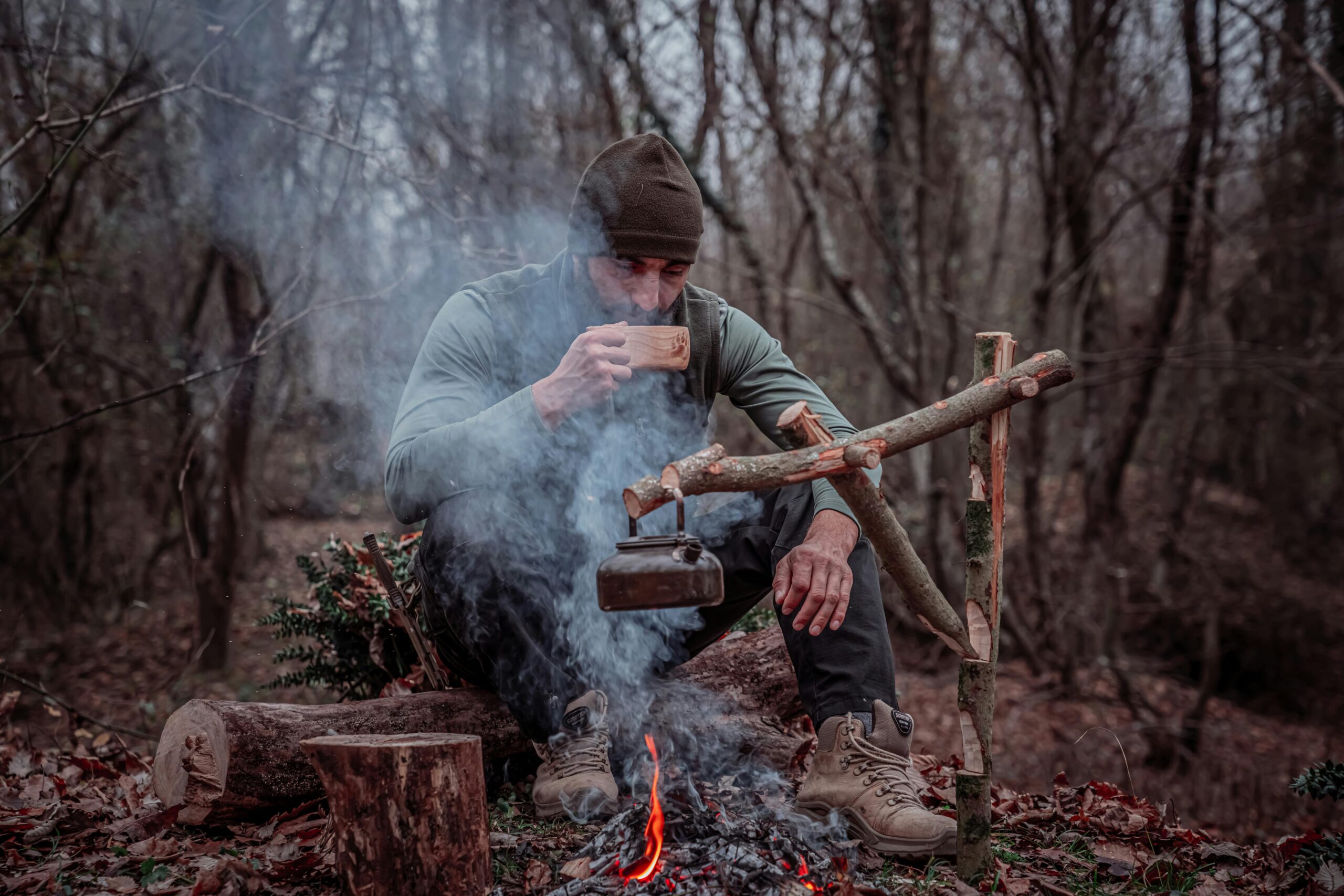
Fire serves multiple purposes: warmth, cooking, water purification, and signaling for help. Mastering fire creation involves gathering tinder, kindling, and fuelwood then using a fire starter, matches, or even the sun with a magnifying glass to ignite. Always remember fire safety to prevent wildfires.
Signaling for Help
If you’re lost or injured, know how to alert rescuers. This could involve using a whistle, making large symbols on the ground visible from the air, or using a mirror to signal with sunlight. Three of anything (blasts of a whistle, fires, piles of rocks) is a universally recognized distress signal.
Navigating and Understanding Your Environment
Navigation skills are critical for finding your way through unfamiliar territory. Basic map reading, using a physical compass, or understanding natural navigation cues, such as the position of the sun, can guide you back to safety. It’s also important to be aware of natural landmarks and consistent in the direction you’re heading.
Nutrition and Foraging
Although you can survive weeks without food, knowing basic foraging can boost morale and energy levels. Beginners should familiarize themselves with common edible plants in the area they plan to explore but remember, the first rule of foraging is safety: if in doubt, leave it out.
First Aid Basics
Understanding basic first aid and carrying a well-equipped first aid kit can make a significant difference. Learning how to treat cuts, burns, and fractures, as well as understanding the signs of and treatments for hypothermia and heatstroke, are crucial survival competencies.
Packing Essential Gear
A well-prepared survival pack is essential. Items should include:
- Water and a way to purify it
- High-energy, durable food items like nuts and dried fruits
- First aid kit
- Multi-tool or knife
- Waterproof matches or a lighter
- Emergency whistle and mirror
- Portable shelter or at least a space blanket
- Map and compass
Conclusion: Ready for Adventure
Equipped with basic survival skills and the right mindset, beginners can confidently embrace the beauty and unpredictability of nature. Remember, the best survival tool is your ability to remain calm and use the resources at hand effectively. With practice and preparation, you’re set not just to survive, but to truly thrive in the wilderness.